
ERP for business operations
An ERP system shaped around your operations.
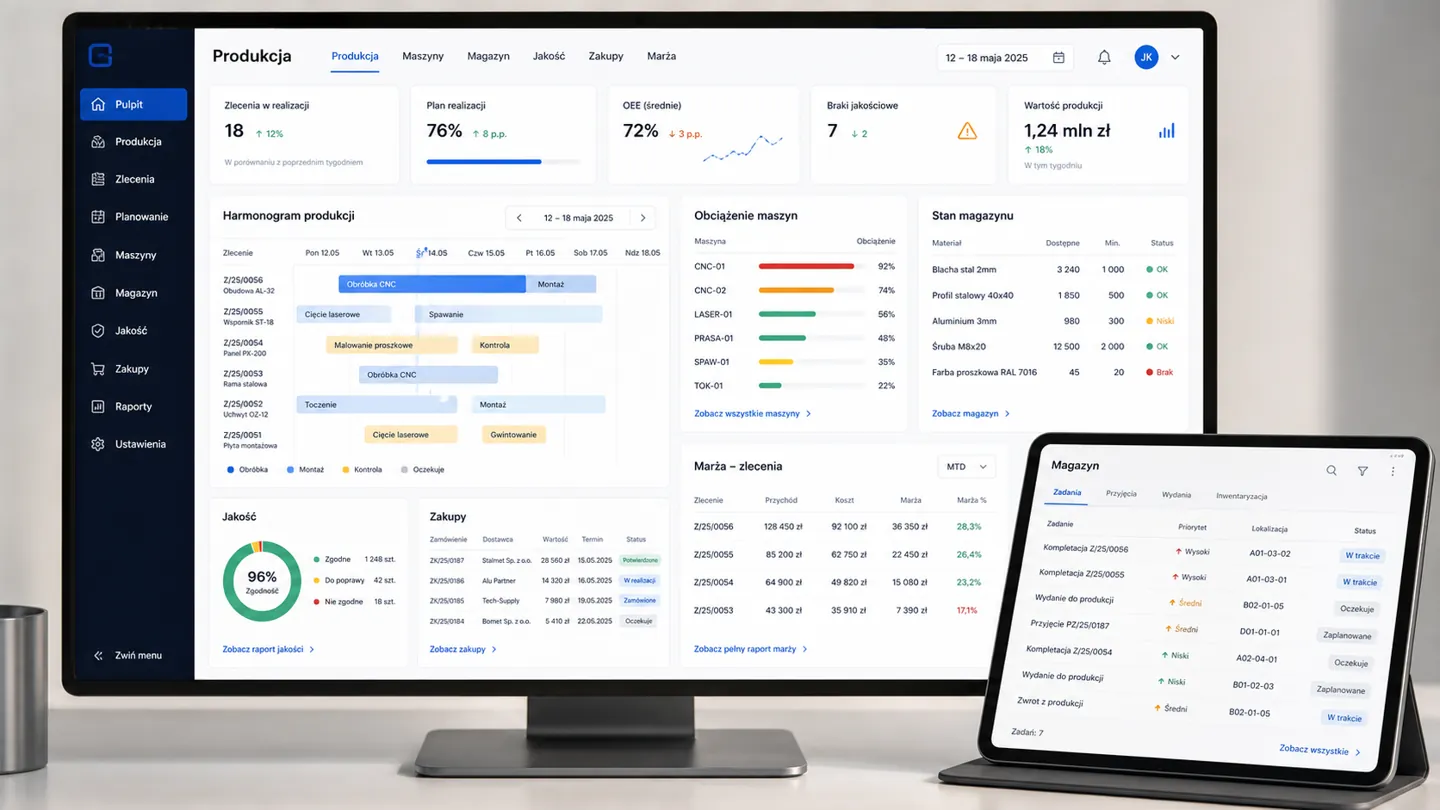
We connect orders, production, inventory, projects, costs and documents in one system designed around the way your teams coordinate work.
Discovery Product UX Development Support
01 / Approach
Operational software should reflect how work and responsibility move.
We map the dependencies between departments and design modules that provide the right information without overwhelming users with the entire system.
Modular delivery
Start with the area that creates the greatest risk or administrative workload.
Consistent data
Orders, materials, projects and costs use one connected source of information.
Role-based views
Each department sees the tasks, statuses and reports relevant to its work.
02 / Capabilities
ERP modules for the complete operational cycle.
The final scope depends on your business model, but every module contributes to one controlled process.
Orders and production
Planning, work orders, resources, status changes, quality steps and delivery deadlines.
Inventory and purchasing
Stock levels, reservations, requirements, suppliers and purchasing decisions.
Projects and profitability
Budgets, time, documents, invoices and margin visibility across ongoing work.
03 / Delivery
Introduce operational change in controlled stages.
A modular approach reduces implementation risk and helps the team learn the new workflow before expanding it.
- 01
Operational audit
Map departments, documents, data and dependencies.
- 02
Module plan
Prioritise the first process and define its interfaces.
- 03
Implementation
Build, integrate, migrate data and test scenarios.
- 04
Expansion
Add modules using a stable shared data foundation.
04 / Business value
A more predictable operation with fewer information gaps.
The ERP becomes a working system for coordination, not only a place where data is entered after the work is finished.
Current status
Teams can see what is planned, blocked, in progress and completed.
Controlled costs
Materials, labour and project costs remain connected to operational activity.
Fewer handoff errors
Departments work with consistent documents, statuses and identifiers.
Practical reporting
Management receives information based on the same process used by the team.
05 / FAQ
Questions before we start.
Clear answers about scope, delivery and the way we work.
Can an ERP be implemented one module at a time?
Yes. We recommend starting with a high-value process and extending the system after the first module is stable.
Can the ERP integrate with accounting or e-commerce tools?
Yes. We assess the available integration methods, ownership of data and required update frequency.
Do you migrate existing operational data?
Yes. Data migration can include cleaning, mapping, validation and a controlled transition from the current tools.
Bring operational data and decisions into one system.
We will help you choose the first ERP module and define a rollout that does not disrupt daily work.